Jet Propulsion Laboratory JPL Earth JPL Solar System JPL Stars and Galaxies JPL Science and Technology MSL Home NASA Home Page Jet Propulsion Laboratory California Institute of Technology Follow this link to skip to the main content
NASA logo, Jet Propulsion Laboratory, California Institute of Technology header separator
+ NASA Homepage
+ NASA en Español
+ Marte en Español
GO!
Mars Science Laboratory Banner
Overview Science Technology The Mission People Features Events Multimedia
Mars for Kids
Mars for Students
Mars for Educators
Mars for Press
+ Mars Home
+ MSL Home

Technology
Summary
Technologies of Broad Benefit
In-Situ and Sample Return
bullet Entry, Descent, and Landing
bullet Autonomous Planetary Mobility
bullet Technologies for Severe Environments
bullet Sample Return Technologies
bullet Planetary Protection Technologies
Science Instruments
In-situ Exploration and Sample Return:
Technologies for Severe Environments
horizontal line

Technologies for severe environments make systems robust enough to handle extreme conditions in space and on Mars.

Managing Extreme Martian Temperatures

Varying martian temperatures create a challenge for thermal engineers. Within the area in which Mars Science Laboratory is capable of landing, temperatures can range from 86 degrees Fahrenheit to -197 degrees Fahrenheit! It is crucial to maintain temperate conditions for the rover's computer "brains" and other critical components.

Since the rover will mainly need to be concerned with warming its components, thermal engineers have ensured that there are multiple ways to accomplish this heating:

  • First, internal components, when in use, naturally give off heat.

  • Second, some electrical heaters will be strategically placed on certain components.

  • The third method is the rover's Heat Rejection System (HRS). This system, with pumps and a fluid loop, can also serve to cool off the rover when necessary. For heating, the fluid loop can gather excess heat from the rover's Muliti-Mission Radioisotope Thermoelectric Generator (MMRTG), the main power source.

The rover's batteries have more stringent temperature requirements. Their temperature will be maintained via the Heat Rejection System and separate Thermo Electric Coolers (TEC) and heaters.

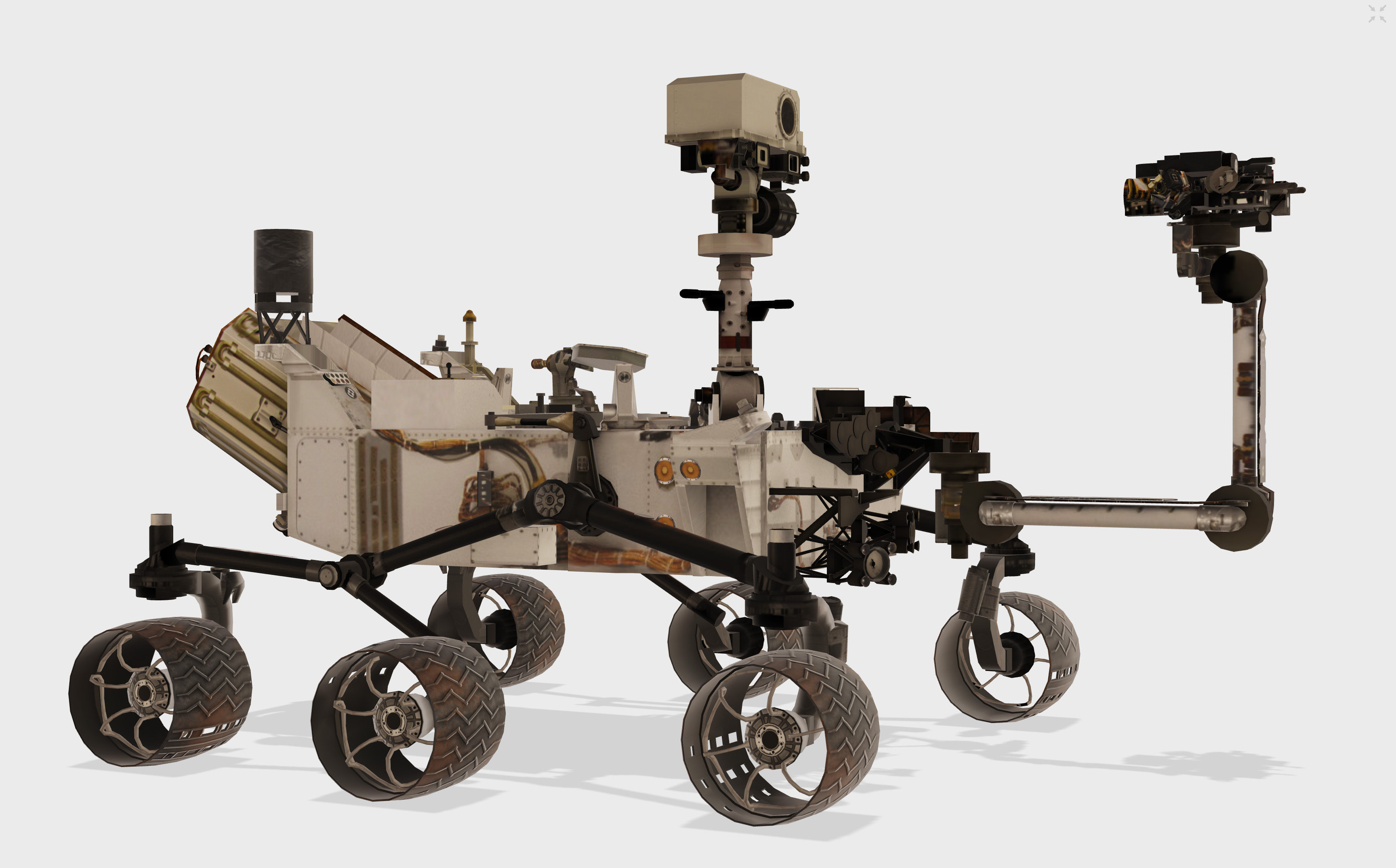
Similar to the warm electronics box (WEB) that is akin to the rover's "body" (which protects the rover's critical computer brains, a Remote WEB (the rover's "head") will be atop the mast (it's "neck") to house and safeguard cameras and a science instrument. Through electrical heating, the Remote Web will keep the mast components above -40 Fahrenheit.

Credits Feedback Related Links Sitemap
USA Gov
National Aeronautics and Space Administration